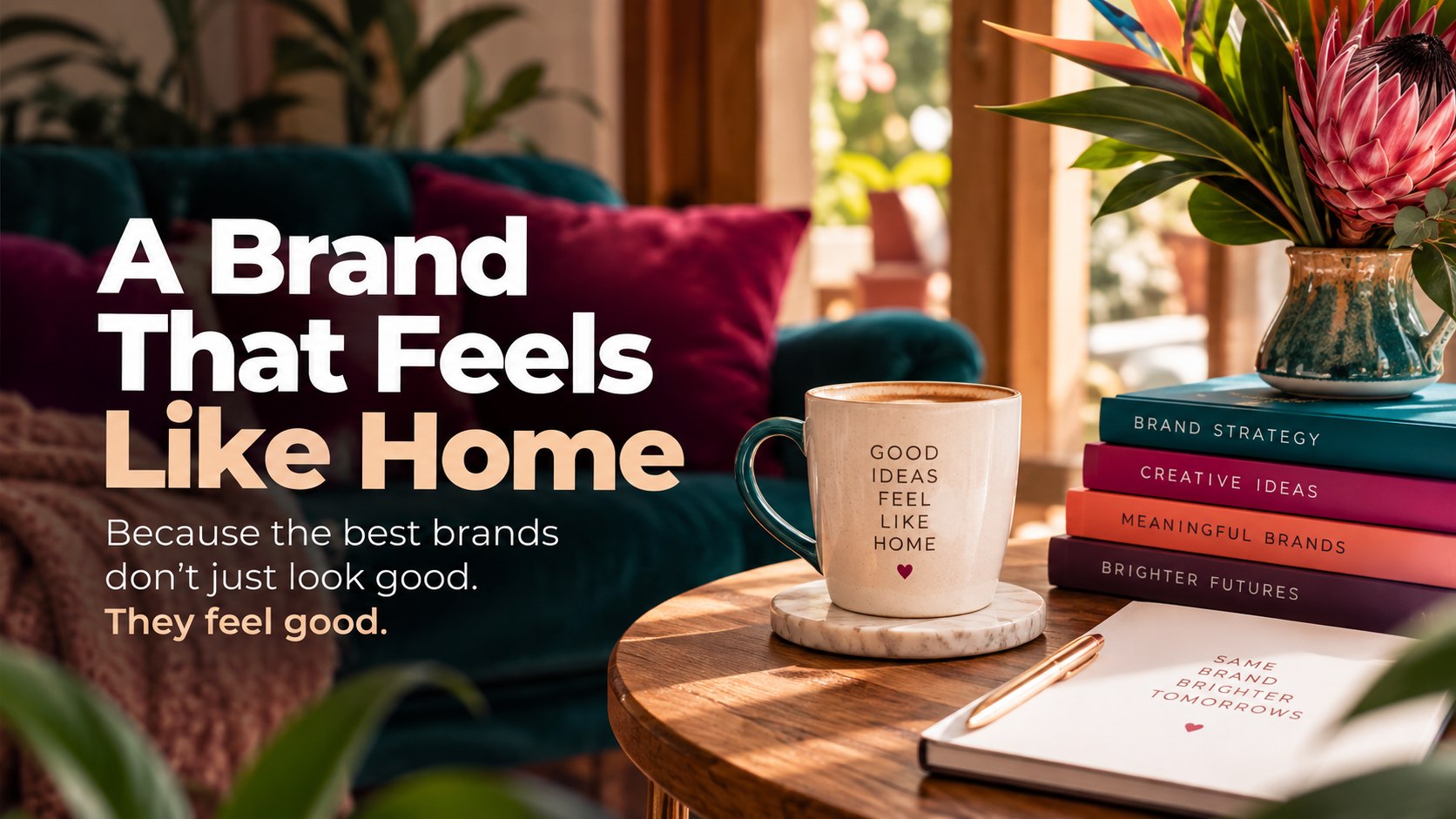
Think about the last place that made you feel instantly at ease. Maybe it was a friend's kitchen, a favourite cafe, or your own front door after a long day. You didn't have to think about why it felt good. It just did.
That's the feeling the best brands create too. Not flashy. Not forced. Just warm, familiar, and completely themselves. When a brand feels like home, people don't just buy from it once. They come back, and they bring others with them.
What We Mean by "Home"
A brand that feels like home isn't about being soft or plain. It's about being real. It's a business that knows exactly who it is, and isn't afraid to let that show in every colour, word, and detail.
Home doesn't mean every brand looks the same. Some homes are bold and colourful. Some are quiet and calm. What they have in common is that everything inside them belongs together. Nothing feels out of place, borrowed, or copied from somewhere else.
The Problem With Brands That Only Look Good
A beautiful logo can catch someone's eye for a moment. But if the website feels cold, the emails feel robotic, and the packaging feels like an afterthought, people notice the gap. It's the same as walking into a stunning house that somehow still feels empty.
Design that only focuses on looking good will always fall a little flat. Design that comes from truth, from knowing exactly who you are and what you stand for, is what makes people stay.
How to Build a Brand That Feels Like Home
1. Start With Your Story, Not Your Style
Before you choose a single colour or font, get clear on why your business exists. What do you want people to feel when they find you? Your story is the foundation everything else gets built on.
2. Let Your Personality Come Through
You don't need to sound like every other business in your industry. If you're warm and playful, let that show in your writing. If you're calm and grounded, let your visuals breathe. The goal isn't to impress everyone. It's to feel unmistakably like you.
3. Keep Showing Up the Same Way
Consistency is what turns a nice first impression into trust. Your website, your social media, your emails, and your packaging should all feel like they belong to the same family. Small details add up to a feeling people remember.
4. Make Room for Connection
A home isn't just beautiful. It's welcoming. Leave space in your brand for real conversation, whether that's through your tone of voice, your customer service, or simply the way you ask questions and listen to the answers.
A simple example, Willow & Bloom: a small flower studio that used to blend in with every other florist online. Once they leaned into their real story, a love for wildflowers and slow, seasonal growing, everything shifted. Their colours softened, their words became more personal, and their photos started showing real hands in real soil instead of stock imagery.
Nothing about the flowers changed. But suddenly, people felt like they knew the business before they even placed an order. That's the difference a brand that feels like home can make.
The Heart of It
Branding isn't about chasing trends or trying to look like everyone else who's doing well. It's about building something so true to you that people feel it the moment they arrive, even if they can't quite explain why.
When your brand feels like home, you stop chasing new customers and start welcoming them instead. That's a much kinder, much more sustainable way to grow.